TAKE ACTION
Foodscape Assessment Toolkit
The built environment affects people’s access to food. It influences how food is distributed, purchased, and consumed, as well as the social and cultural norms around food. Understanding the relationship between the built environment and people’s everyday food behaviors can help cities identify key opportunities to make healthy food choices easier, convenient, and more inviting for all.
The Foodscape
Assessment
Toolkit
The Foodscape Assessment Toolkit, developed in collaboration with Gehl, is a step-by-step guide which contains four core elements to help local partners gain profound insights into the food environment within a neighborhood. It provides a combination of quantitative and qualitative observational research methods to build a narrative of how people experience food places, public life, and public space - also known as the foodscape.
The Tools:
1. Defining the purpose
2. Mapping & engaging stakeholders
3. Mapping & understanding the foodscape
4. Framing the findings
What is a Foodscape?
A foodscape is combination of food places, public life, and public space within a neighborhood, and it defines the food experience of its residents and users.
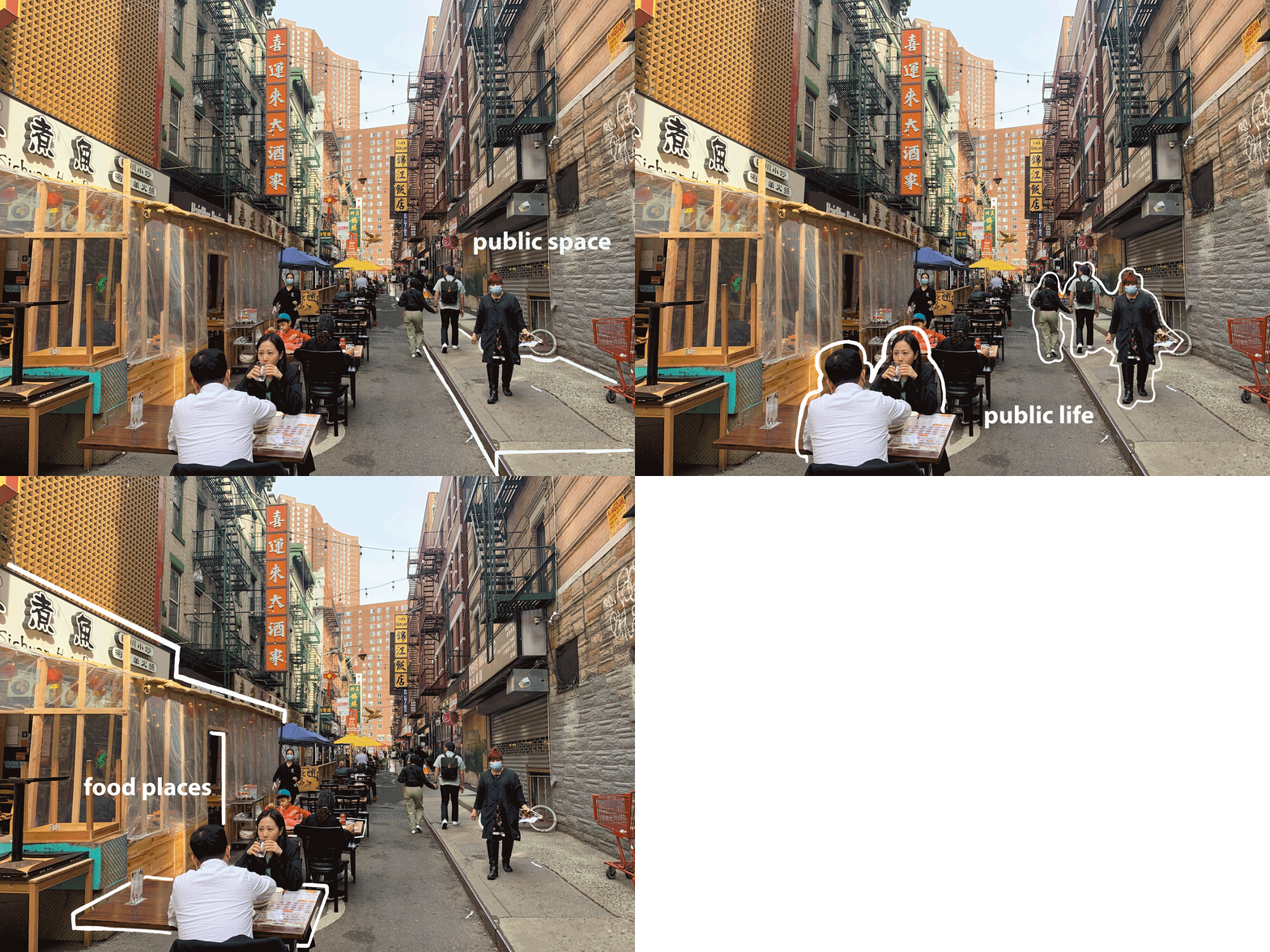
Food places are where people get their food, including grocery stores, restaurants, food banks, corner stores, street vendors, farmers markets, and more. Ensuring a variety of food places with nutritious and accessible food offerings can promote healthy food choices.
Public life is the collective life of a city. It is what people create when they live life outside of their homes, workplaces, and cars. When people are invited to spend time in the public realm, share experiences, and connect with one another, cities become healthier, more vibrant places.
Public space is the city network on which public life takes place. It is the streets, plazas, parks, sidewalks, and other spaces between buildings. The presence of high-quality public space can foster community cohesion, promote public safety, and create the right conditions for healthy food behaviors.
Why is it important to work with Foodscapes?
Conducting a foodscape assessment is the first step to identifying how public spaces and food places can better facilitate joyful food routines in a way that promotes equity, the health of people and the planet, and community wealth.

Equity
Marginalized, low-income neighborhoods in urban areas often have less high-quality public space, lack access to nutritious food, and experience greater food insecurity. Fostering a robust public life around healthy food behaviors in low-resource areas can make cities more equitable.

Health
The general health of a population rests on people’s ability to access enough nutritious food to sustain a high quality of life, stay healthy, and participate in society. Ensuring access to healthy food in cities is also a key way to combat the global rise in obesity, diabetes, and other chronic disease.

Climate
Many steps along the food system, including production, processing, and distribution are big contributors to greenhouse gas emissions. Minimizing the climate impact of food systems creates healthier environments for those who work in and live around food sourcing processes.

How have cities worked with Foodscapes already?
Community foodscape studies have been completed in multiple cities. Learnings from these studies informed the development of the Foodscape Assessment Toolkit. Find the reports on the foodscape studies at the bottom of the page.
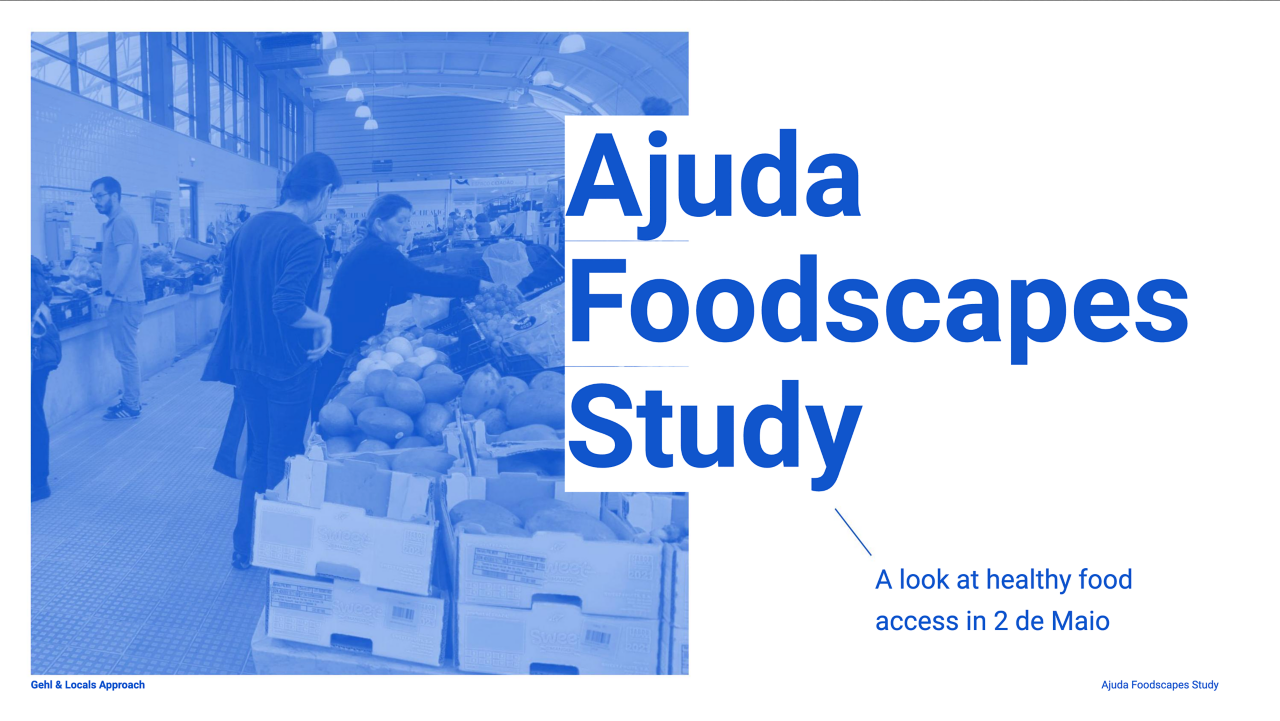
Partners in Lisbon are conducting community-based research on the foodscape in the Ajuda neighborhood. In the video below, you’ll hear from many of the stakeholders involved on the different perspectives brought forward by the foodscapes approach.
BOGOTA, COLOMBIA
LISBON (AJUDA), PORTUGAL